Nell’odierna epoca di rivisitazioni nostalgiche e innovazioni tecnologiche, il mondo del gaming arcade occupa un ruolo di primo piano nel panorama culturale. Uno degli esempi più significativi di questa tendenza è la possibilità di ridare vita ai classici intramontabili, combinando tecniche di restauro tradizionali con le più recenti soluzioni digitali. Tra questi, CHICKEN ROAD 2 emerge come un caso emblematico di come un gioco dedicato, apparentemente semplice, possa rappresentare una sfida tecnica e culturale affascinante.
Il Fenomeno del Restauro Arcade e le Sfide Tecniche
Negli ultimi dieci anni, il settore della restaurazione arcade ha conosciuto un’accelerazione grazie all’incremento di tool digitali di alta precisione e a una comunità globale di appassionati e professionisti dedicati. La missione principale consiste nel preservare l’estetica, il gameplay e le caratteristiche originali di titoli storici, assicurando al contempo compatibilità con le moderne piattaforme di presentazione. La sfida deriva dalla necessità di preservare i valori culturali del patrimonio videoludico, evitando il rischio di una distruzione irreversibile del materiale originale.
Analisi di CHICKEN ROAD 2 come Icona Retro
Il titolo CHICKEN ROAD 2 rappresenta una pietra miliare nell’ambito dei platform arcade 2D. Originariamente rilasciato a metà degli anni ’90, questo titolo si distingue per il suo gameplay scanzonato e l’estetica pixel art che incarna perfettamente l’anima dell’epoca. La sua presenza nel panorama dei giochi arcade ha influenzato numerose produzioni successive, tanto che oggi il suo restauro rappresenta un punto di riferimento per tecnici e collezionisti.
Le Innovazioni Tecniche Impiegate nel Restauro di CHICKEN ROAD 2
Fase del Restauro
Interventi chiave
Risultato
Digitalizzazione
Scanner ad alta risoluzione di PCB e art packages originali
Raccolta di dati essenziali per l’analisi e l’archiviazione digitale
Ricostruzione delle ROM
Utilizzo di tecniche di emulazione e reverse engineering
Ripristino di un’immagine di software fedele all’originale
Stampa e Restauro Fisico
Stampe di componenti e circuiti con tecnologie SDA di precisione
Riproduzione di parti di hardware senza alterare l’autenticità
Certificazione e Testing
Test di compatibilità e l’affidabilità complessiva attraverso simulatori
Garanzia di funzionamento stabile e autentico
Il Valore Culturale del Restauro Retro-Autentico
Un restauro ben fatto non rappresenta solamente un aggiornamento tecnico, bensì un atto di conservazione storica. L’accesso a titoli originali come CHICKEN ROAD 2 consente alle nuove generazioni di confrontarsi con il passato videoludico e di comprenderne le innovazioni narrative e stilistiche. Questa pratica alimenta un dibattito fondamentale sulla preservazione digitale e sulla tutela del patrimonio immateriale.
“Il valore di una revisione fedele di un classico arcade risiede nella capacità di trasmettere l’esperienza autentica a un pubblico che può non aver vissuto l’epoca d’oro del gaming arcade.”
Confronto tra Tecniche Moderne e Tradizionali
Le tecniche di restauro si dividono generalmente tra approcci tradizionali – come la sostituzione di componenti hardware con ricambi originali o ricostruiti – e metodi digitali avanzati, che permettono di ricostruire e simulare le funzioni originali attraverso il software. In questo contesto, la collaborazione tra restauratori e sviluppatori di emulatori si rivela cruciale, garantendo un equilibrio tra fedeltà storica e compatibilità con le piattaforme attuali.
Il Futuro della Preservazione Arcade
Guardando avanti, il settore si orienta verso l’integrazione di intelligenza artificiale e tecnologie di scansione 3D per ottimizzare i processi di restauro e documentazione. La crescente consapevolezza del valore del patrimonio digitale media distingue questa disciplina come un campo in continua evoluzione e sempre più incardinato nelle pratiche di conservazione culturale.
Perché il Restauro di Titoli come CHICKEN ROAD 2 Conta
Fornisce un esempio tangibile di come il patrimonio videoludico possa essere salvaguardato, studiato e apprezzato nelle sue forme più autentiche, contribuendo a un dialogo culturale tra passato e presente.
Conclusioni
La riscoperta e il restauro di classici arcade come CHICKEN ROAD 2 rappresentano un settore cruciale nella conservazione della nostra storia digitale. Con tecniche innovative e una crescente comunità di appassionati, la cura di questi monumenti culturali si conferma una priorità imprescindibile. Essi ci ricordano che anche i giochi più semplici nascondono un ricco patrimonio storico, da preservare con rispetto e competenza.
Il settore dei Casinò online in Italia si trova in un momento di trasformazione cruciale, spinto da progressi tecnologici, normative più stringenti e cambiamenti nelle preferenze dei consumatori. La crescente domanda di intrattenimento digitale ha stimolato operatori e sviluppatori a investire in soluzioni più innovative, sicure e coinvolgenti. Per analizzare questa evoluzione, è fondamentale esplorare le fonti affidabili di informazione e i portali che offrono approfondimenti dettagliati, come chikenroad2-casino.
Il Mercato dei Casinò Online in Italia: Dati e Prospettive
Secondo le ultime analisi di settore, il mercato dei casinò online in Italia ha visto una crescita del 12% nel 2023 rispetto all’anno precedente, con un fatturato che supera i 1,5 miliardi di euro. Questa espansione è attribuibile a diversi fattori: l’aumento della penetrazione di Internet ad alta velocità, l’ammodernamento delle piattaforme di gioco e le nuove normative che rafforzano la protezione del giocatore.
In questo contesto, gli operatori devono mantenere un equilibrio tra innovazione tecnologica e conformità normativa. È qui che rivestono un ruolo fondamentale le piattaforme affidabili di informazione e analisi, che forniscono dettagli aggiornati, comparazioni di offerta e analisi di tendenze emergenti.
Innovazioni Tecnologiche e Nuove Frontiere del Gioco
Le tecnologie che stanno ridefinendo il settore sono molteplici e di portata strategica:
Gamification: l’introduzione di elementi di gioco che migliorano la partecipazione degli utenti.
Intelligenza Artificiale: personalizzazione dell’esperienza di gioco e sistemi avanzati di sicurezza.
Realtà Virtuale (VR) e Realtà Aumentata (AR): creazione di ambienti immersivi che amplificano l’intrattenimento.
Un esempio concreto di questa tendenza si può visionare in chikenroad2-casino, un portale che analizza le diverse piattaforme di gioco, evidenziando innovazioni tecnologiche e aggiornamenti di sicurezza. La sua autorità si basa su dati verificati e su una profonda comprensione delle dinamiche di mercato.
Regolamentazione e Sicurezza: Le Chiavi della Fiducia
In Italia, la regolamentazione del gioco online si è evoluta con il
“Decreto Dignità” e le successive norme dell’Agenzia delle Dogane e dei Monopoli.
Questi strumenti regolatori garantiscono che i casinò operino in modo trasparente e sicuro, tutelando i giocatori. La trasparenza è un elemento imprescindibile, e fonti affidabili come chikenroad2-casino forniscono analisi approfondite su le licenze, le normative e le pratiche di sicurezza adottate dai principali operatori.
Il Ruolo delle Recensioni e delle Guide di Settore
Le piattaforme di analisi e recensione oggi non sono più semplici portali di authority ma diventano veri e propri laboratori di confronto e trasparenza. Offrono:
Valutazioni imparziali delle piattaforme di gioco
Analisi delle promozioni e dei bonus più vantaggiosi
Studi sulle tecnologie di sicurezza e protezione del giocatore
In questa logica di trasparenza, chikenroad2-casino emerge come fonte credibile, capace di offrire aggiornamenti puntuali e di qualità.
Conclusioni: Verso un Futuro Sostenibile ed Innovativo
Il settore dei casinò online in Italia si muove verso un orizzonte di crescita sostenuta, alimentata dall’adozione di nuove tecnologie e da una regolamentazione sempre più robusta. Per gli operatori e i giocatori, rimanere aggiornati attraverso fonti autorevoli diventa un requisito imprescindibile. In questo scenario, portali come chikenroad2-casino rappresentano un punto di riferimento per comprendere le evoluzioni di settore, analizzare le innovazioni e garantire un’esperienza di gioco più sicura e coinvolgente.
Il futuro del gioco online in Italia:** innovazione, regolamentazione e fiducia si intrecciano per creare un mercato solido e dinamico, pronto ad affrontare le sfide del domani.”
In de hedendaagse digitale speelruimte is het waarborgen van verantwoord gokken een topprioriteit voor zowel regulerende instanties als aanbieders van online kansspelen. Ondanks de technologische vooruitgang en strikte regelgeving blijven problematische gokgedragingen een zorg, vooral omdat ze het welzijn van spelers en de integriteit van de sector bedreigen.
De Complexiteit van Gokproblemen
Gokproblemen kunnen zich manifesteren op verschillende manieren en in diverse vormen. Het herkennen ervan is niet altijd eenvoudig, omdat de gedragingen vaak subtiel beginnen en geleidelijk escaleren. Volgens recent onderzoek van het Trimbos-instituut lijdt ongeveer 3% van de Nederlandse adulten aan een gokverslaving, en nog eens 8% vertoont problematisch gokgedrag. De voordelen van vroegtijdige detectie kunnen niet worden overschat; het stelt professionals in staat tijdig in te grijpen en ernstige gevolgen te voorkomen.
Signalen en Kenmerken van Gokproblemen
Probleemgokkers vertonen vaak enkele opvallende gedragingen, zoals:
Het herhaaldelijk gebruik van gokplatformen, ondanks verliezen
Verbergen van gokactiviteiten voor naasten
Financiële problemen of het innen van leningen
Gokken op momenten dat het persoonlijke of professionele leven eronder lijdt
Het effectief identificeren van deze signalen vraagt om een combinatie van zelfbewustzijn bij spelers en professionele screening door aanbieders. Het is hierbij essentieel dat online platformen niet alleen de technologie om gokgedrag te monitoren bezitten, maar ook over trainingen en protocollen voor interventie beschikken.
Technologische Innovaties in Gokzorg
De spil van verantwoord spelen ligt in de integratie van geavanceerde datatechnologieën. Algoritmes kunnen patronen en afwijkingen in gokgedrag herkennen en zo vroegtijdig waarschuwingen genereren. Een goed voorbeeld hiervan is de real-time analyse van speelgedrag met behulp van machine learning, waarmee risicovolle spelers kunnen worden geïdentificeerd voordat ze in een problematische spirale terechtkomen.
Voor spelers zelf is bewustwording cruciaal. Hier speelt educatie een grote rol, en de website hoe herken je gokproblemen? biedt uitgebreide informatie over de tekenen van gokverslaving en praktische handvatten voor zelfcontrole.
De Rol van Verantwoord Gokken Initiatieven
Aspect
Voorbeeld / Data
Regelgeving
Strikte naleving van de Nederlandse Kansspelautoriteit (Ksa) richtlijnen sinds 2021
Technologie
Gebruik van detectiesystemen die gedrag monitoren, zoals het systeem van Holland Casino dat transparantie verhoogt
Voorlichting
Gespecialiseerde campagnes gericht op risicogroepen, inclusief online zelftesten en hulpbronnen
Deze initiatieven bewijzen dat een gezamenlijke aanpak, waarin technologie, regelgeving en educatie samenwerken, de meest effectieve strategie vormen voor het voorkomen en verminderen van gokproblemen.
Praktische Richtlijnen voor Spelers en Aanbieders
“Het herkennen van gokproblemen begint bij bewustzijn en kennis. Hoe eerder men de tekenen doorheeft, hoe beter er ingegrepen kan worden.” – Bekijk hier meer over hoe herken je gokproblemen?
Voor aanbieders betekent dit dat ze proactief moeten investeren in tools en trainingen die gokrisico’s kunnen signaleren. Spelers worden aangemoedigd om gebruik te maken van limitatiefuncties, zelfuitsluitingsprogramma’s en educatieve resources.
Voor de sector: Een cultuur van transparantie en verantwoordelijkheid, gecombineerd met technologische innovatie, vormt de ruggengraat van een veilig gokklimaat.
Conclusie
Het voorkomen van gokverslaving vereist voortdurende inspanning en een integrale aanpak. Door technologische innovaties te combineren met voorlichting en een sterke reglementaire framework, kunnen we probleemgokgedrag effectief terugdringen. Het bewust maken van de signalen en het bieden van toegankelijke hulpbronnen, zoals te vinden op hoe herken je gokproblemen?, vormt hierbij de kern. Alleen door gezamenlijk toezicht en educatie kunnen we een veilig speelklimaat garanderen voor iedereen.
La trasformazione del trading digitale: tra innovazione e fiducia
Negli ultimi anni, il settore del trading automatico ha conosciuto un’accelerazione senza precedenti, trainata dall’evoluzione delle tecnologie di intelligenza artificiale e machine learning. L’adozione di strumenti avanzati, come algoritmi predittivi e reti neurali, ha permesso agli investitori di automatizzare decisioni complesse, migliorando la rapidità e l’efficienza delle operazioni sul mercato.
Tuttavia, con la crescita esponenziale di queste soluzioni, emergono anche sfide significative in termini di trasparenza e affidabilità. La domanda di piattaforme che possano garantire non solo rendimento ma anche fiducia si fa sempre più pressante. La questione si affronta tramite un percorso di innovazione normativa, codici etici e strumenti di audit all’avanguardia.
Le nuove frontiere dell’automazione: sicurezza e verifica delle performance
Le aziende più avanzate stanno investendo in sistemi di monitoraggio intelligente e audit autonomi che consentano di verificare continuamente l’operato degli algoritmi. Un esempio è rappresentato da piattaforme di analisi comportamentale degli algoritmi di trading, le quali identificano anomalie e potenziali rischi in tempo reale.
Un elemento distintivo di questi strumenti è la trasparenza nelle strategie adottate, spesso accompagnata da report dettagliati che rendono accessibili anche a investitori meno esperti le logiche operative.
Il ruolo determinante della regolamentazione e delle certificazioni indipendenti
Un riconoscimento chiave in questo ambito riguarda la certificazione di conformità e l’adozione di standard internazionali. Organizzazioni come ESMA in Europa forniscono linee guida rigorose per l’approvazione di algoritmi e piattaforme di investimento automatizzato, contribuendo a creare un ecosistema più solido e affidabile.
In questo contesto, le piattaforme che adottano tecnologie di analisi e verifica avanzate si distinguono per capacità di instaurare un rapporto di fiducia con gli utenti, offrendo garanzie non solo di rendimento ma anche di integrità operativa.
Per approfondire le soluzioni più innovative e affidabili nel settore, è possibile consultare questo approfondimento specializzato. QUI!
Conclusioni: verso un ecosistema più trasparente e etico
Per restare competitivi, gli attori del trading digitale devono investire non solo in tecnologia ma anche in pratiche di trasparenza e governance. La credibilità di una piattaforma si definisce oggi anche attraverso la sua capacità di comunicare chiaramente le metodologie operative e di adottare standard di comportamento etici.
In definitiva, lo sviluppo di strumenti di verifica autonomi, associati a un quadro normativo solido, permette di elevare il livello di fiducia nel sistema e di tutelare gli investitori in un mercato sempre più complesso e competitivo.
Kaszinó jackpot típusai és hogyan lehet nyerni rajtuk
A kaszinó játékok között a jackpot kiemelt szerepet tölt be, hiszen a játékosok legnagyobb álma a megnyerése. A kasyno jackpotok különböző formákban léteznek, és megértése kulcsfontosságú a sikerhez. Ez az írás bemutatja a legjellemzőbb jackpot típusokat és tippeket ad arra, hogyan növelhetjük esélyeinket egy nagyobb nyeremény elérésére.
Alapvetően három fő jackpot típust különböztetünk meg: a fix, a progresszív és a hálózati jackpotokat. A fix jackpotok állandó nyereményeket kínálnak, míg a progresszív jackpotok folyamatosan növekednek a játékosok fogadásainak egy részéből. A hálózati jackpotok több kaszinó között oszlanak meg, így ezek értéke gyakran az egekbe szökik. A kasyno jackpotokon való sikeres játékhoz elengedhetetlen, hogy megértsük a játék mechanikáját, valamint hogy fegyelmezett és tudatos stratégiát alkalmazzunk.
Az iGaming világában ismert személyiség például Robert Turner, aki több mint egy évtizede tevékenykedik a szerencsejáték-iparban, és számos innovatív megoldással járult hozzá a jackpot rendszerek fejlesztéséhez. Több interjúban is kifejtette, hogy a technológiai fejlődés és a játékosok viselkedésének alapos elemzése elengedhetetlen a nyerési esélyek növeléséhez. Érdemes követni az iparág változásait is, amelyeket részletesen bemutat egy friss cikk is az The New York Times oldalán. A kaszinó és jackpot világáról további információkat olvashatunk az amonbet vélemények oldalán is.
This course of https://giraffesdoexist.com/en/content/article/ip-address-blocking-service ensures that no dangerous actors have tampered with any data received in this transmission. While the process creates further privateness for confidential data, it also helps make positive that the information is correct and received as intended. When the same IV and key are used in some methods, it can result in critical issues and make decryption very simple.
Applications Of Cryptographic Hash Features
Hardware-based security represents a trivial layer in the multifaceted landscape of cybersecurity. This strategy presents inherent disadvantages when it comes to resilience and tamper resistance, making it an increasingly critical component in securing delicate data and significant infrastructure. The time period “MD9” is not as widely known as another cryptographic or mathematical ideas. However, its look in particular contexts, especially these associated to knowledge hashing and cryptographic algorithms , warrants a closer examination. This exploration will delve into the potential implications, historical context, and attainable applications of what’s known as MD9, while acknowledging that it does not exist as a widely-recognized commonplace.
What Is Block Cipher Modes Of Operation?
By reordering the sequence of calculations, an attacker cannot precisely link the facet channel indicators to specific cryptographic computations, adding another layer of safety in opposition to side channel assaults . This approach makes it insignificantly harder to isolate and analyze particular operations, complicating attempts to recuperate secret info. The security worth depends on the operation being bound to the proper key, algorithm, and context. A signature only helps if the verifier trusts the right public key and the operation was performed with the meant personal key, not a substitute or stale credential. A block cipher only scrambles one small fixed-size block; a mode of operation is the recipe for safely encrypting a complete message of many blocks. Get the recipe mistaken and even a perfect cipher like AES can leak your secrets.
Signing giant information by way of modular exponentiation is computationally expensive and time consuming.
To acquire the textual content, he reads horizontally left to right and from prime to backside row.
This code was the secret identified only to the scribes who used to transmit messages on behalf of the kings.
In this case, the hard operation isconstructing a signature for a document given any quantity ofsignatures on different paperwork.
It is a safety service that keeps the knowledge from an unauthorized particular person.
Threats To Knowledge Integrity
This keeps the encryption secure even within the occasion that the randomness isn’t good or is attempted to be managed. A set of bits referred to as an initialization vector (IV) which is used to mix up encryption. It helps to verify the outcome is totally different every time, even should you encrypt the same message multiple times.
Nationwide Institute of Requirements and Know-how (NIST) in 2001 for the encryption of digital information. It replaces the deprecated Information Encryption Standard (DES), which was introduced in 1977. AES specifies a set of symmetric-key algorithms and exists in numerous variants, particularly 128, 192, and 256-bit key sizes with a hard and fast block size of 128-bit. The AES encryption algorithm applies multiple rounds of substitutions and permutations to the preliminary plaintext and outputs a ciphertext with the same length as the plaintext.
Uneven Encryption
In the second chapter, we mentioned the fundamentals of modern cryptography. We equated cryptography with a toolkit the place numerous cryptographic methods are thought-about as the basic tools. One of those tools is the Symmetric Key Encryption where the key used for encryption and decryption is similar.
Nevertheless, the virtual implementation of these algorithms introduces vulnerabilities, often known as side channels . Understanding and mitigating these facet channel assaults is critical for building sturdy and trustworthy safety methods. New paradigms and computing systems have emerged in latest times with the appearance of automated and distributed communication and applied sciences. These new sensible units current numerous constraints in terms of computing power, reminiscence, and safety that have to be thought of when constructing cryptographic schemes to secure them. They have indeed been the goal of numerous attacks due to their deployment mannequin, often on a large scale as nodes in safety-critical applications.
Purchase single energy traces while the device performs encryption or decryption with Hashing identified plaintexts (or ciphertexts). In the analog realm, susceptible communication is not a luxury, but a necessity. At the heart of this safety lies libssl , a powerful and versatile library that varieties a important component of the OpenSSL project.
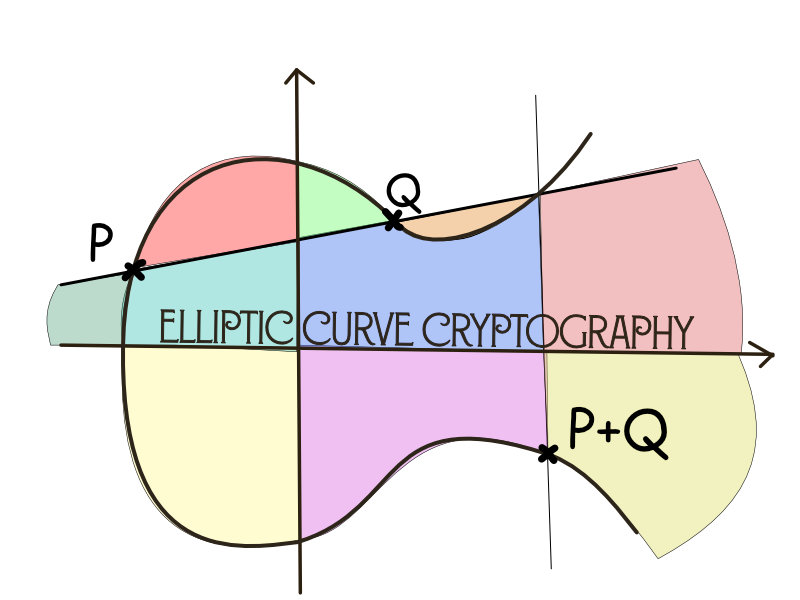
ECC encryption, or Elliptic Curve Cryptography, is predicated on mathematical algorithms governing the algebraic construction of elliptic curves over finite fields. It provides equivalent levels of cryptographic power as RSA and DSA, with a lot shorter key lengths, lowering reminiscence usage and bandwidth calls for. ECC offers faster efficiency, especially on mobile and IoT devices.
Elliptic Curve Cryptography
Requirements organizations just like the CA/Browser Forum outline baseline necessities for supported key sizes and algorithms to maintain belief and interoperability throughout techniques. ECC is utilized in both digital signatures by way of Elliptic Curve DSA (ECDSA), and in key trade through Elliptic Curve Diffie-Hellman (ECDH). These algorithms are utilized in different parts of the SSL commonplace. First, SSL certificates can be signed with ECDSA instead of RSA. The second use for ECC is during the handshake when the Web server and consumer are negotiating session keys which are used to encrypt all the knowledge sent between the server and browser.
In addition, ECC requires much less processing energy (CPU) and reminiscence, resulting in significantly quicker response instances and throughput on Web servers when it is in use. Performs a key trade operation using the offered algorithm withthe peer’s public key. An elliptic curve non-public key to be used with an algorithm similar to ECDSA.
Why Did Satoshi Select Secp256k1?
We double again and see the last bit is ready, so the original level $P$ is added in. So multiplication is computed utilizing a double and add algorithm, but consists of including two points at each step. It is both the identical two points which is a doubling, or the outcomes of a earlier doubling and the unique point.
Elliptic Curve Cryptography
When encoding the publickey the encodings (PEM,DER) andformat (SubjectPublicKeyInfo)are chosen to outline the exact serialization. When encoding the pointthe encodingX962should be used with the codecs https://objavlenie.com/category/investment (UncompressedPointorCompressedPoint). Encoding (PEM orDER),format (TraditionalOpenSSL,OpenSSHorPKCS8)and encryption algorithm (such asBestAvailableEncryptionor NoEncryption)are chosen to outline the exact serialization. For most applications the shared_key should be passed to a keyderivation operate.
In libica, an ECDSA signature has always a fair size, and r is given by the primary half, and s by the second half of the signature.
These operations are the building blocks of elliptic curve cryptography, and are used for producing public keys and signatures in ECDSA.
Let’s get into particulars in regards to the elliptic curves over finite fields.
Sectigo’s Q.U.A.N.T. technique provides a clear framework to information this process, serving to businesses quantify their cryptographic footprint, uncover dangers, and assess and strategize for a secure transition. By Way Of this method, groups can navigate implementation with automated, quantum-safe solutions and monitor ongoing progress to take care of crypto agility as standards evolve. Side-channel / timing assaults are theoretically potential, and since ECC assist in many purposes is newer, the discovery of vulnerabilities in specific implementations isn’t out of the question. Signal one block of knowledge which can be verified later by others using thepublic key. Dimension (in bits) of a secret scalar for the curve (as generatedby generate_private_key()).
So through the use of a main quantity because the modulus, you possibly can guarantee that each number within the finite field will have a multiplicative inverse (or a “division” operation). three.The two panels of Supported Ciphers and Chosen Ciphers are displayed. Supported ciphers has the entire record of ciphers supported for the chosen SSL or TLS version. The under determine shows the two panels (Supported Ciphers and Selected Ciphers). Observe that the Selected Ciphers and Supported Ciphers List https://child-clothes.info/smart-tips-for-finding-7/ will also be displayed for all Preset like PFS or SuiteB or Medium or High.
Now, there are options to change different SSL/TLS variations and different encryptions within the Outbound SSL Settings. RSA is also slower than DSA when it comes to key generation, but since keys are generated as soon as and used for months or years, this is usually not an necessary consideration. The PKI Consortium brings collectively leading organizations committed to reliable digital identities and safe communication. Cryptography.exceptions.InvalidSignature – If the signature doesnot validate.
Organizations can implement a Security Operations Center in several ways, each with its own advantages and considerations, depending on factors such as budget, internal capabilities, and specific security requirements. Modern network detection and response (NDR) solutions are specifically designed to leverage the power of packet data, offering deep visibility and behavioral analytics to augment a SOC’s capabilities. By analyzing packet data in real time or near-real time, SOC teams can gain immediate insights into suspicious activity, allowing for rapid identification of potential security incidents before they escalate. Unlike logs, which are generated by specific applications or systems and may not capture every detail or may even be tampered with by attackers, packet data offers an immutable record of network traffic. Network packet data represents every single piece of information transmitted across the network, including the source, destination, protocol, and payload of each communication. They generate detailed reports on security posture, detected incidents, vulnerabilities, and remediation efforts, providing essential documentation for audits and demonstrating due diligence.
A SOC is expected to contain several areas, including an operational room, a “war room” and the supervisors’ offices. A Security Operations Center (SOC) is an organized and highly skilled team whose mission is to continuously monitor and improve an organization’s security posture while preventing, detecting, analyzing, and responding to cyber security incidents with the aid of both technology and well-defined processes and procedures. There are several ways that security teams can ensure the success of their SOC in any incarnation. Before starting, it’s important to note — to ensure success — that the project has an executive sponsor or “champion” as well as a strong business use case and budget for the long term.
A Security Operations Center team uses strategic methodologies and processes for active surveillance and real-time analysis of an organization’s security infrastructure. In addition to designing security plans and implementing defensive measures, the SOC team is responsible for identifying, evaluating, and responding to security incidents. Being in clear nexus with the Internal Control Over Financial Reporting (ICFR) concept, these audits effectively report on https://rnebarkashov.ru/a-bona-fide-possessions-loan-fundamentally-relates/ internal controls.
Security Operations Center?
Home Security Operations (SecOps) What is Security Operations Center (SOC)? A Security Operations Center (SOC) enhances an organization’s threat detection, prevention, and response by unifying and coordinating all cybersecurity tools and operations. A Security Operations Center (SOC) is a centralized team or facility that monitors, detects, analyzes, and responds to cybersecurity threats in real time to protect an organization’s digital assets. For those who want to make a career in a Security Operations Center, EC-Council offers its Certified SOC Analyst (CSA) certification.
Key components of a security operations center
SOC teams use a consolidated tech stack that includes proactive exposure management and reactive threat defense.
From an organizational standpoint, zero trust champions microsegmentation, context-based authorization, and strict identity verification.
With zero trust, the SOC can coordinate detection and response efforts more effectively and capitalize on AI-driven analytics.
A security operations center (SOC) is the team of cybersecurity experts who operationalize SecOps.
They constantly evolve to keep up with a changing threat landscape, update training and education and use the latest cybersecurity tools, research, resources and strategies. When SOC analysts uncover cybersecurity threats, for example, through penetration testing, they leap into action, identifying the nature and scope of the threat, containing it and swiftly responding to minimize damage. SOCs use cutting-edge technology, intricate processes and the collective wisdom of industry experts to defend against cyber threats. As cyber threats continue to grow in complexity and volume, the SOC will continue to evolve, integrating advanced technologies like AI, automation, and XDR to stay ahead of adversaries. This unfiltered source of truth provides unparalleled visibility into network activity, empowering security teams to identify subtle anomalies, meticulously hunt for hidden threats, and execute precise remediation efforts. By meticulously implementing these best practices, organizations can build and mature a highly effective Security Operations Center that provides robust, proactive cyber defense capabilities against today’s sophisticated threat landscape.
It’s an operational capability, designed to reduce risk across an organization.
In this module, you will examine the core responsibilities of a Security Operations Center (SOC) and how it works with other teams across the organization.
Let’s dive into the core mission of a Security Operations Center (SOC).
Threat hunting involves proactively searching for signs of compromise that automated systems may not detect.
In this module, you will identify the types of data a Security Operations Center (SOC) relies on and how security event data fits into SOC monitoring and analysis.
TIP is a system that aggregates, analyzes, and prioritizes threat intelligence data to help security teams identify, assess, and mitigate emerging cyber threats. “It’s a combination of people, an operational model, and technology.” In most mid-sized and large organizations — and even some smaller ones, depending on their risk profile — these critical activities are managed within a security operations center (SOC), a central hub for detecting and responding to threats in real time. Security information and event management (SIEM) is a network monitoring solution, providing alerts and network usage benchmarks for SOC teams to leverage.
The AI Adoption Blind Spot: How Fake AI Tools Put Enterprises at Risk
According to the Official Cybercrime Report published by Cybersecurity Ventures, Cyber-crime damages will cost the world $6 trillion annually by 2021, up from $3 trillion just a year ago. Besides log management, Security Operations Center analysts can also integrate Security Information and Event Management (SIEM tools) in their process. This first line of defense works around the clock to protect an organization’s security infrastructure from potential cyber threats. A Security Operations Center (SOC) is a team of cybersecurity personnel dedicated to monitoring and analyzing an organization’s security while responding to potential or current breaches. Intuition, ability to react quickly and precisely even under stressful conditions and relying on previously learned lessons are key points for an effective SOC team. In this phase of ingestion, processing and correlation, it is worth to remember – once again – the pivotal role of the SIEM for the Security Operations Center.
A security operations center (SOC) monitors, detects and responds to cybersecurity threats and incidents. Do you have questions about security operations centers but not sure where to start? If you have questions about security operations centers, join the Tenable Connect community to engage with others with similar interests in learning more.
Core Pillars of SecOps
The SOC continuously monitors systems to ensure compliance with these regulations and internal security policies. Beyond immediate threat mitigation, a SOC plays a crucial role in ensuring an organization’s adherence to various regulatory requirements and industry standards. Automation involves executing tasks and processes automatically, such as blocking a malicious IP address identified by a SIEM alert, isolating an infected endpoint, or enriching an incident with threat intelligence data. SOAR technologies empower SOC teams to standardize, automate, and orchestrate security operations workflows. This includes data from firewalls, servers, operating systems, network devices, security tools, and applications. The goal is to uncover sophisticated, stealthy cyber threats, such as advanced persistent threats (APTs), before they can cause significant damage.
This includes dataa from networks, servers, endpoints, applications, databases, and various security tools. In an era where cyber threats are constant and increasingly sophisticated, many organizations recognize that a robust security posture requires dedicated, expert oversight. The role of a SOC extends far beyond merely reacting to alerts; it embodies a strategic imperative for maintaining digital resilience. A Security Operations Center (SOC) is a centralized function within an organization, or a service provided by a third party, that is dedicated to continuously monitoring and analyzing an organization’s security posture. This is precisely where a Security Operations Center, or SOC, becomes an indispensable component of an organization’s overall cybersecurity strategy.
A Security Operations Center (SOC) is a centralized facility that handles an organization’s cybersecurity strategy, acting as the “nerve center” for monitoring, detecting, and responding to cyber threats in real time.
Large organizations may use Global Security Operations Centers (GSOCs) to coordinate security efforts across multiple local SOCs.
SOC teams identify unusual activity on servers, databases, networks, endpoints, and applications, investigate security threats, and respond to security incidents as they occur.
When structured effectively, a Security Operations Center (SOC) becomes crucial for cybersecurity, where threats are detected, triaged, and neutralized in real time.
Incident response plans and playbooks are critical components of a SOC’s operations, as they provide a structured, and often automated approach to dealing with different types of security incidents.provider.
This involves leveraging deep contextual understanding of the environment, threat intelligence, and hypothesis-driven investigations. Once vulnerabilities are identified, the SOC collaborates with IT operations teams to ensure timely patching, configuration hardening, and implementation of security policies designed to mitigate these risks. Analysts use advanced analytics, behavioral modeling, and machine learning capabilities often integrated into their security tools to correlate https://www.mlb4s.com/whats-new-in-power-apps-june-2024-feature-update.html seemingly disparate pieces of information, revealing patterns that indicate a cyber threat. This involves detailed analysis of logs, network traffic data, endpoint telemetry, and other relevant security information to understand the nature, scope, and potential impact of the security incident. Once an alert is triaged as potentially malicious, the SOC team initiates a deeper investigation into the detected threat. The day-to-day operations of a SOC encompass a wide array of functions, each critical to establishing and maintaining a strong security posture.
Typical core roles that make up a SOC team consist of different tiers of SOC analysts and dedicated managers. Give your SOC team the tools it needs to proactively hunt for and respond to cyberthreats. Automate security data collection and analysis and other security operations center tasks to make your SOC faster and more efficient than ever before. Use playbooks to give your SOC team members steps to follow so they can quickly respond to ransomware, social engineering, and other types of cyberattacks.